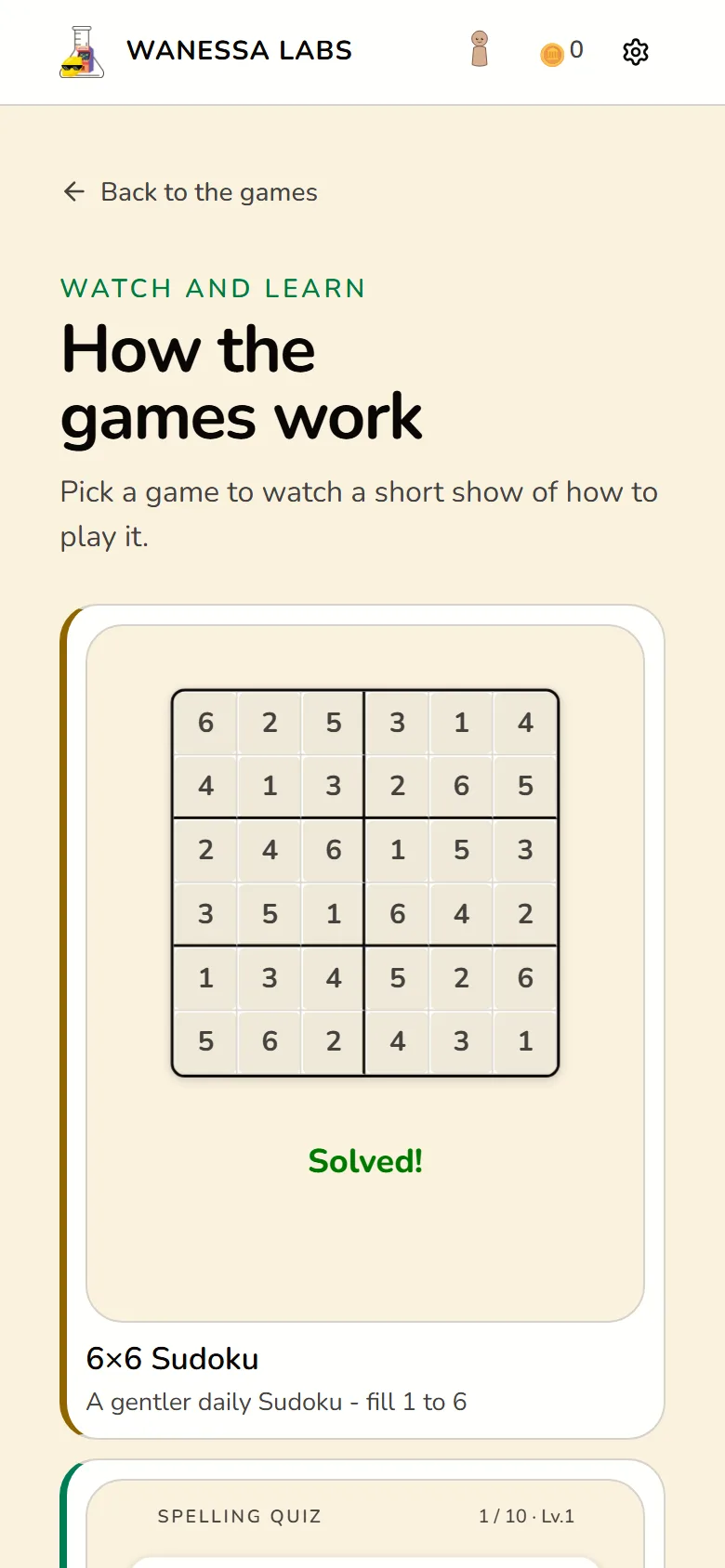
I have built 36 games on this hub and explained almost none of them. Most had a rules panel somebody had to find, read and trust. Mahjong had a faan table. Big Two assumed you already knew the suit order. The games that most needed explaining were the ones I explained least.
The Problem
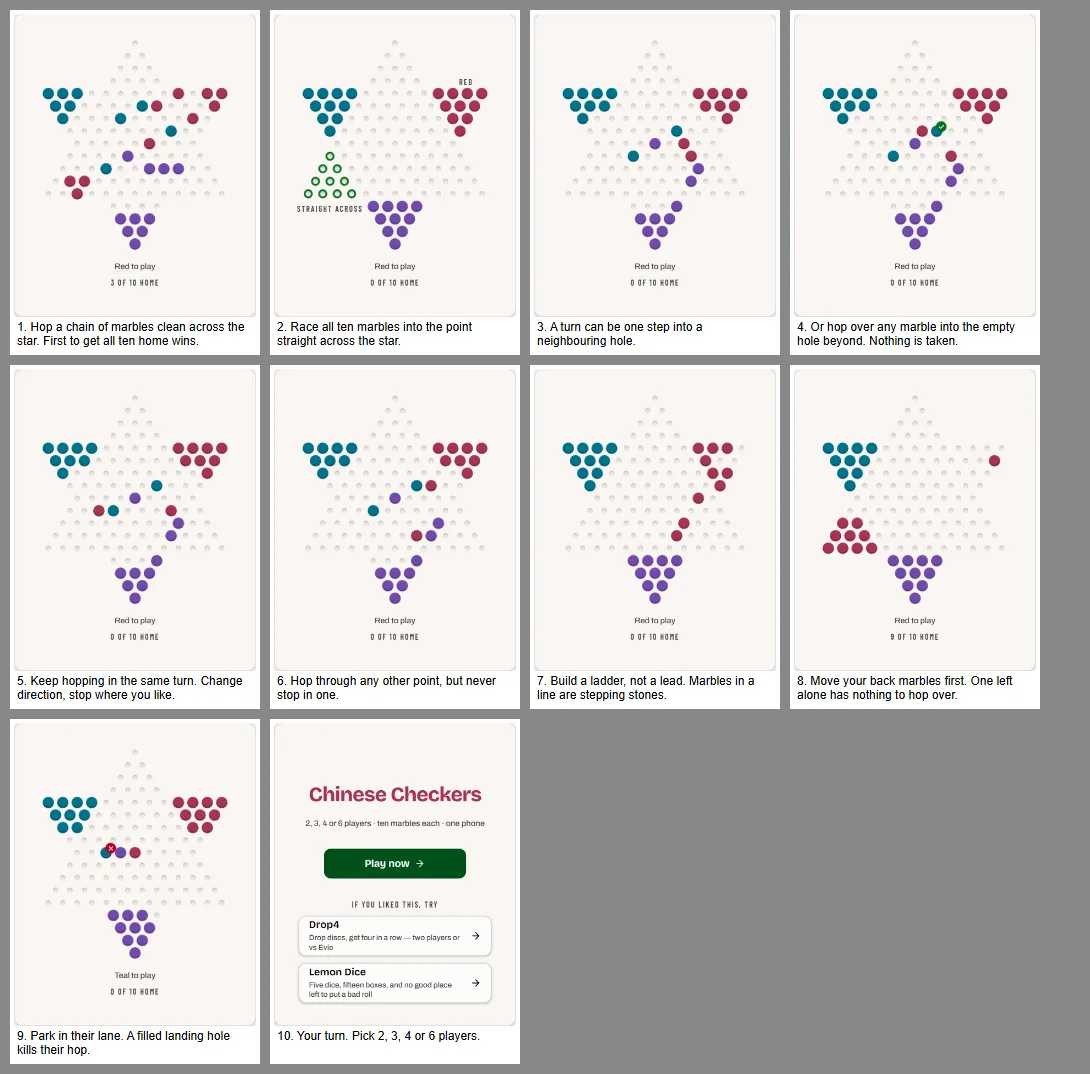
Rules text is the wrong medium for a rule. “A claim counts every card on the table” means nothing until you watch four hands turn face up and the fib come apart. People learn a card game by watching someone play one hand.
So I wanted every game to have that hand: thirty to fifty seconds of the game played for you, slowly, with each rule shown at the moment it matters.
What It Is
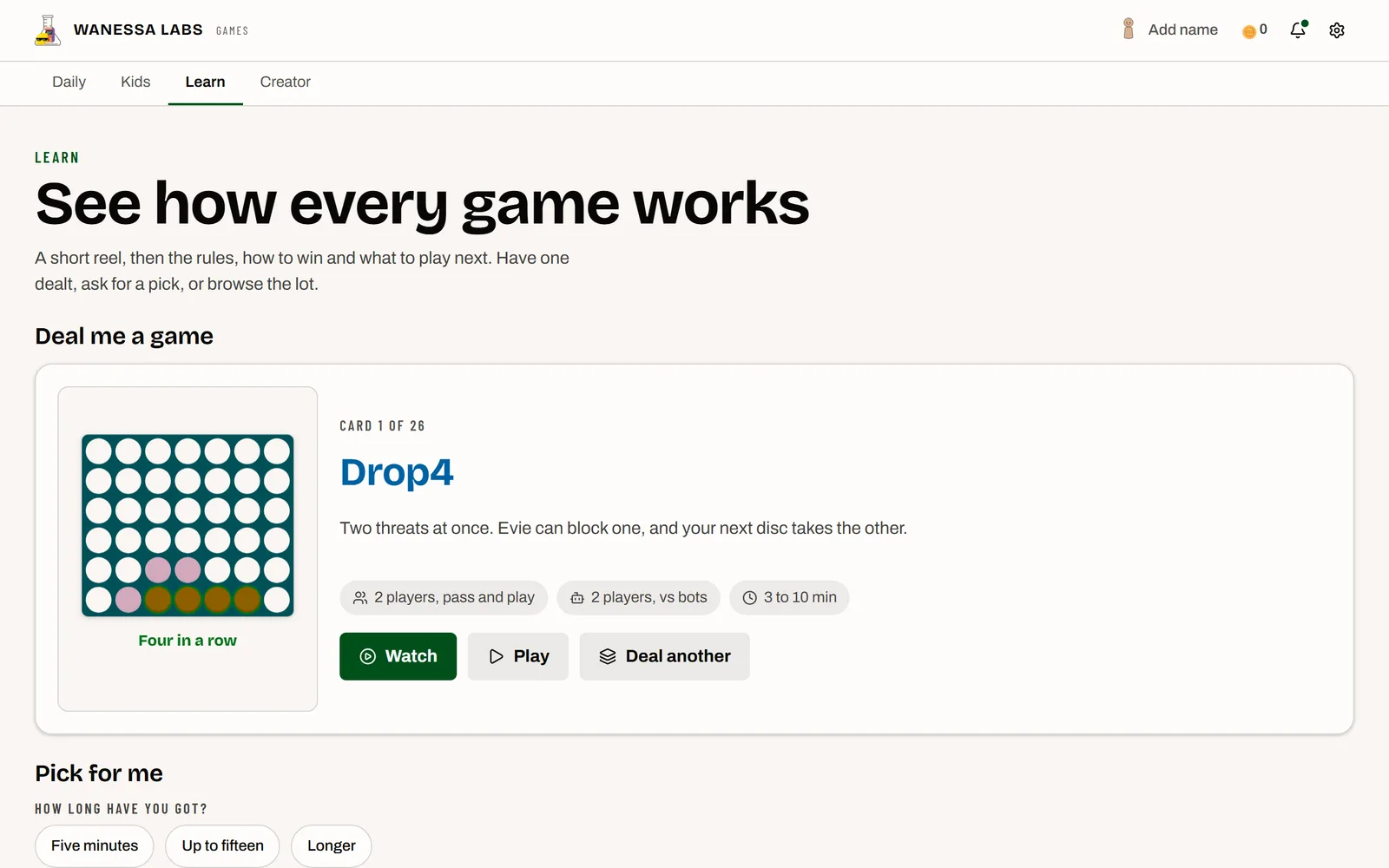
A Learn tab on the hub, with three ways in. Deal me a game shows one game at a time from a shuffled deck, and the deck ends. Pick for me asks how long you have, who is playing and what kind of thinking you want, then names three games and says why. Browse all lists everything by section.
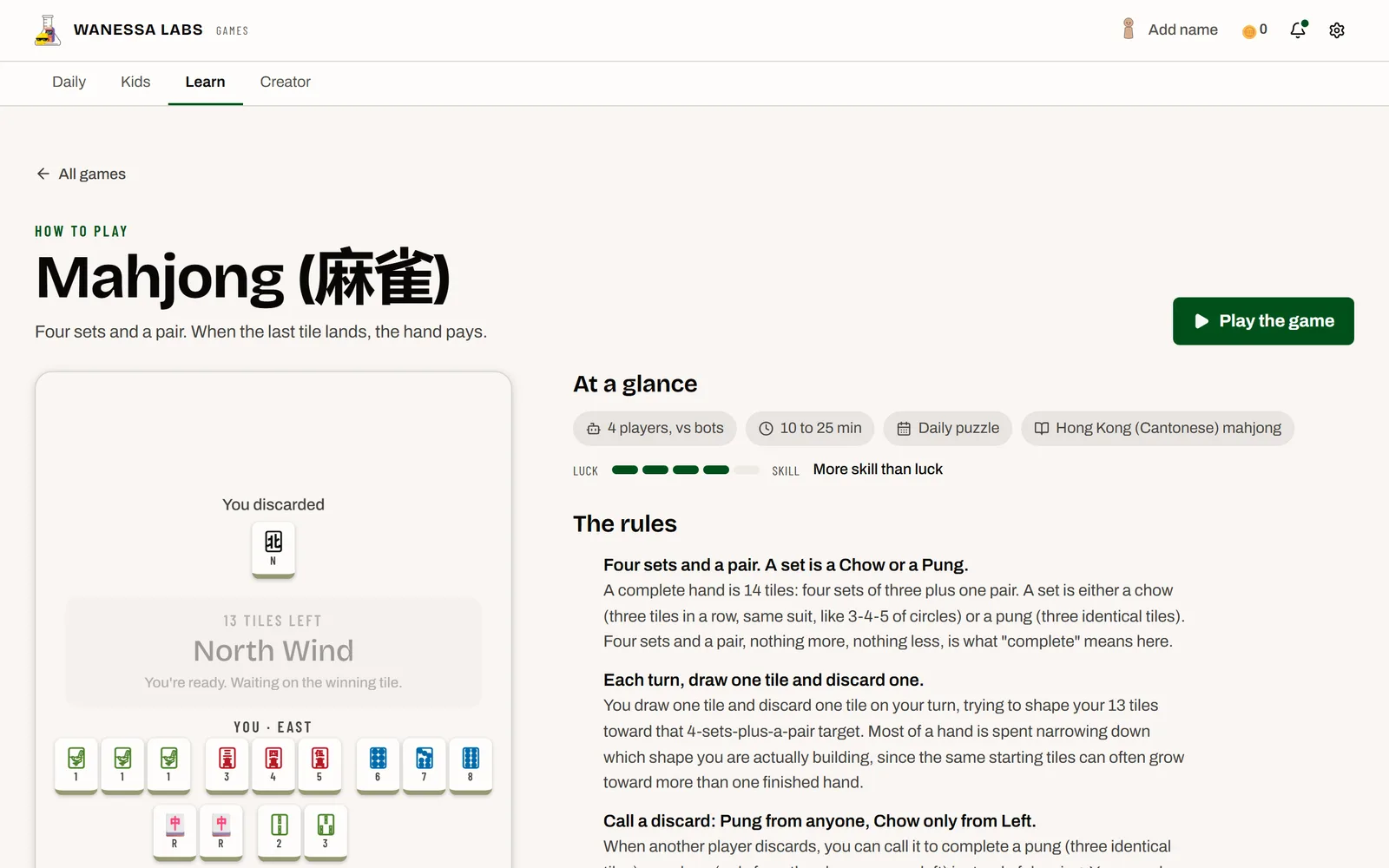
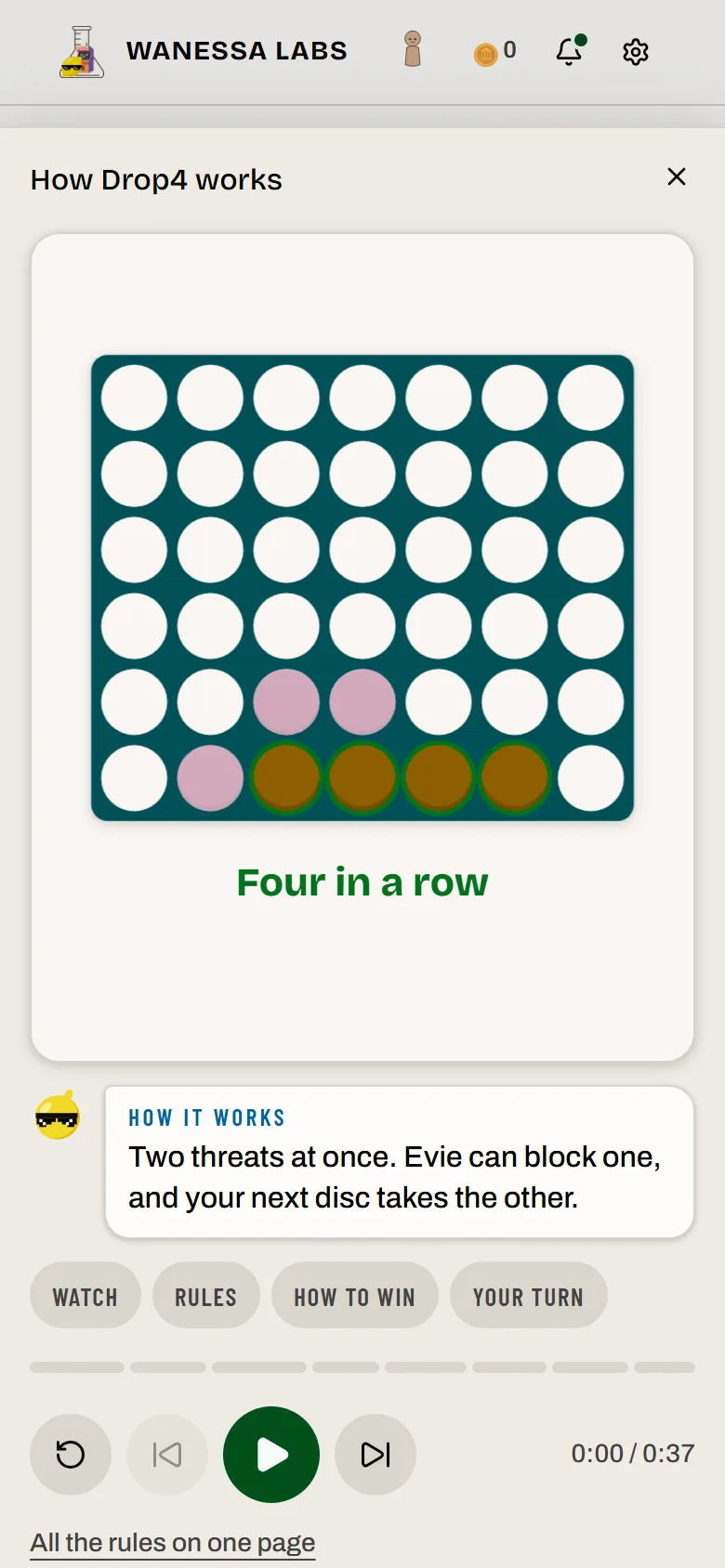
Each game gets a one-pager: the reel, the facts at a glance, the rules, how to win, the game’s own words, and what to try next. Inside every game, a How to play button opens the same reel in a sheet.
Kids games have their own shelf inside the Kids Hub. Their reels show one turn and one encouraging tip, with no scores, no timers and no links out.
How a Reel Works
Every reel is a script of beats, and each beat is a list of moves: this card flips at 900 milliseconds, that panel slides in at 1,200. The script compiles into a timeline where the position of everything on stage is a pure function of time. Nothing is recorded and nothing depends on the clock, so any frame can be drawn on demand. That is what makes a screenshot, a test or a future video export of any moment possible.
The first reel was a prototype for Fibbers Poker, a single HTML file. I ported it as is, and a test now checks the port against frames read out of that prototype. Its pacing became the bar for the other 35.
Rules Come From the Game
This was the rule I cared about most. Every caption traces to the game’s own How to play text, or, where a game has none, to help text written from its code. Every percentage on screen is worked out by the game’s own engine at build time. None is typed in by hand.
Holding to that overruled my own creative brief eleven times. I asked for a Ski Rash reel that weaves through gates, and Ski Rash has no gates. I asked for a Paper Squadron hook where you deflect a shot back at an enemy, and a roll cancels a shot, it does not deflect it. I asked for a 2048 cascade in one swipe, and a tile can only merge once per move. My tip for Low Roller was backwards. Each time, the reel follows the game.
Built in Parallel
I wrote the engine, the player and the first reel. The other 35 were written in parallel, one game each, against a written authoring guide. Each reel ships with a test file that replays every move on stage through the game’s own engine and checks that every claimed outcome is true: the merge, the caught bluff, the winning tile.
Of 76 tips, 69 are backed by an engine check. The other seven ship marked as drafts for me to review.
What I Learned
Writing a reel turned out to be a good way to audit a game. Making the claims checkable surfaced things I had not seen. Dishwasher’s plates-touching rule counts a large plate as its own neighbour. Drop4 announces “You wins!”. The help text was wrong about Blackjack’s hard 12 in a way the strategy chart contradicts. Each one surfaced when I tried to show it on stage and a test refused.
Not Included
No accounts, no tracking and no network calls. A reel is part of the game’s code and plays offline. The only thing Learn remembers is whether you have already dismissed the “New here?” chip on a game.
No autoplay. A reel starts when you press play, stops at its last beat, and never rolls into another one.