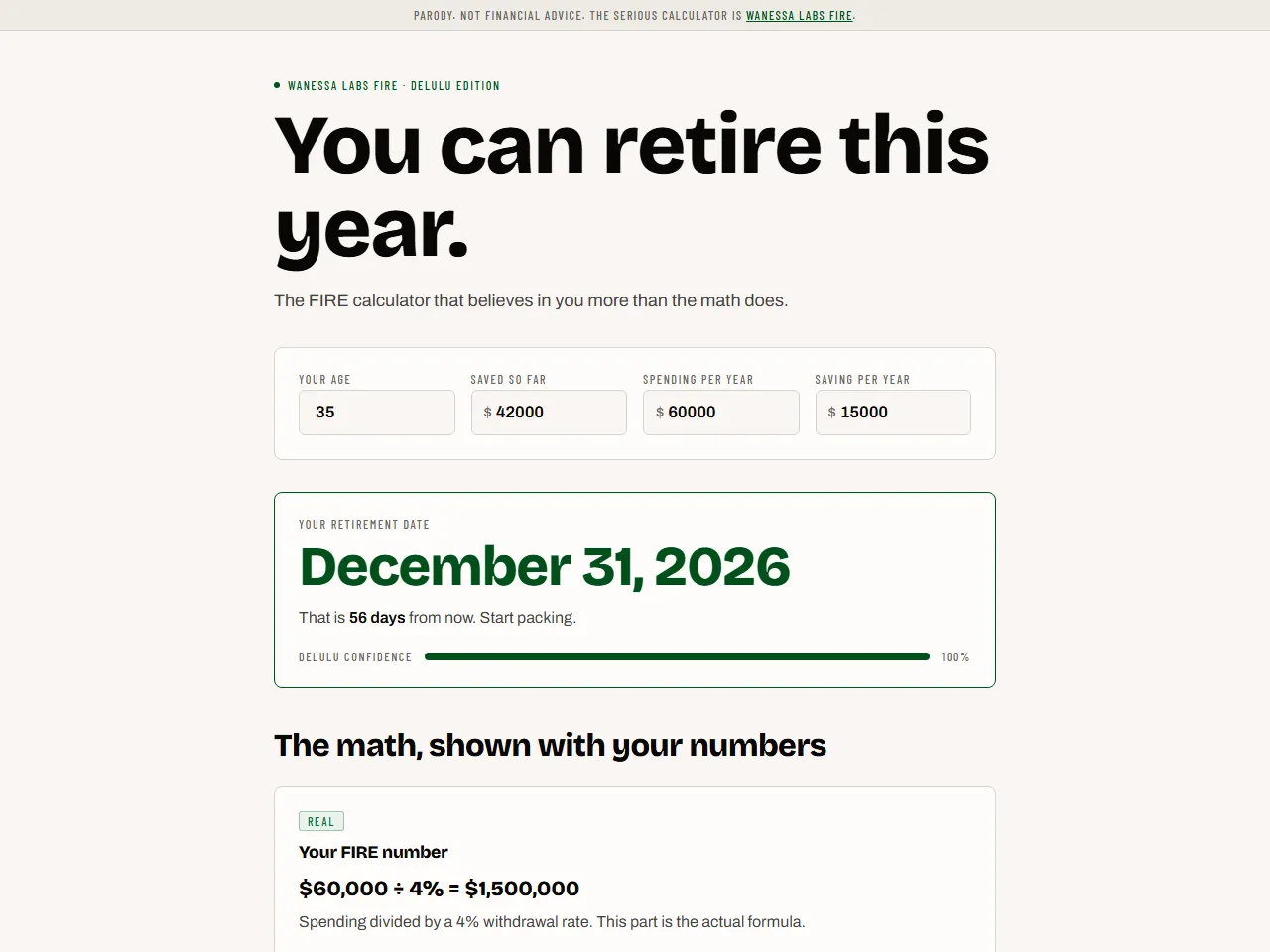

Wanessa Labs FIRE shows its math and refuses to give one answer. This is its delulu sibling: a FIRE calculator that tells you, every time, that you can retire by the end of the year. It is a parody, built for a laugh, and it says so at the top of the page, in the footer and in its description.
You type four numbers: your age, what you have saved, what you spend in a year and what you save in a year. The answer is always December 31 of the current year, with a countdown in days and a “Delulu confidence” bar that fills to 100% no matter what.
The Math, Shown With Your Numbers
The real site promises the math with your numbers in it, so the parody keeps the promise and runs it backwards. Two cards are tagged “Real”: the FIRE number, spending divided by a 4% withdrawal rate, and the gap between it and your savings. Every card after them starts from the conclusion and solves for whatever it would take.
- Plan A is the annual return your savings need between now and New Year’s Eve.
- Plan B turns the gap into lattes you would have to skip each day at $5.75.
- Plan C turns it into dollars of side hustle per day, weekends included.
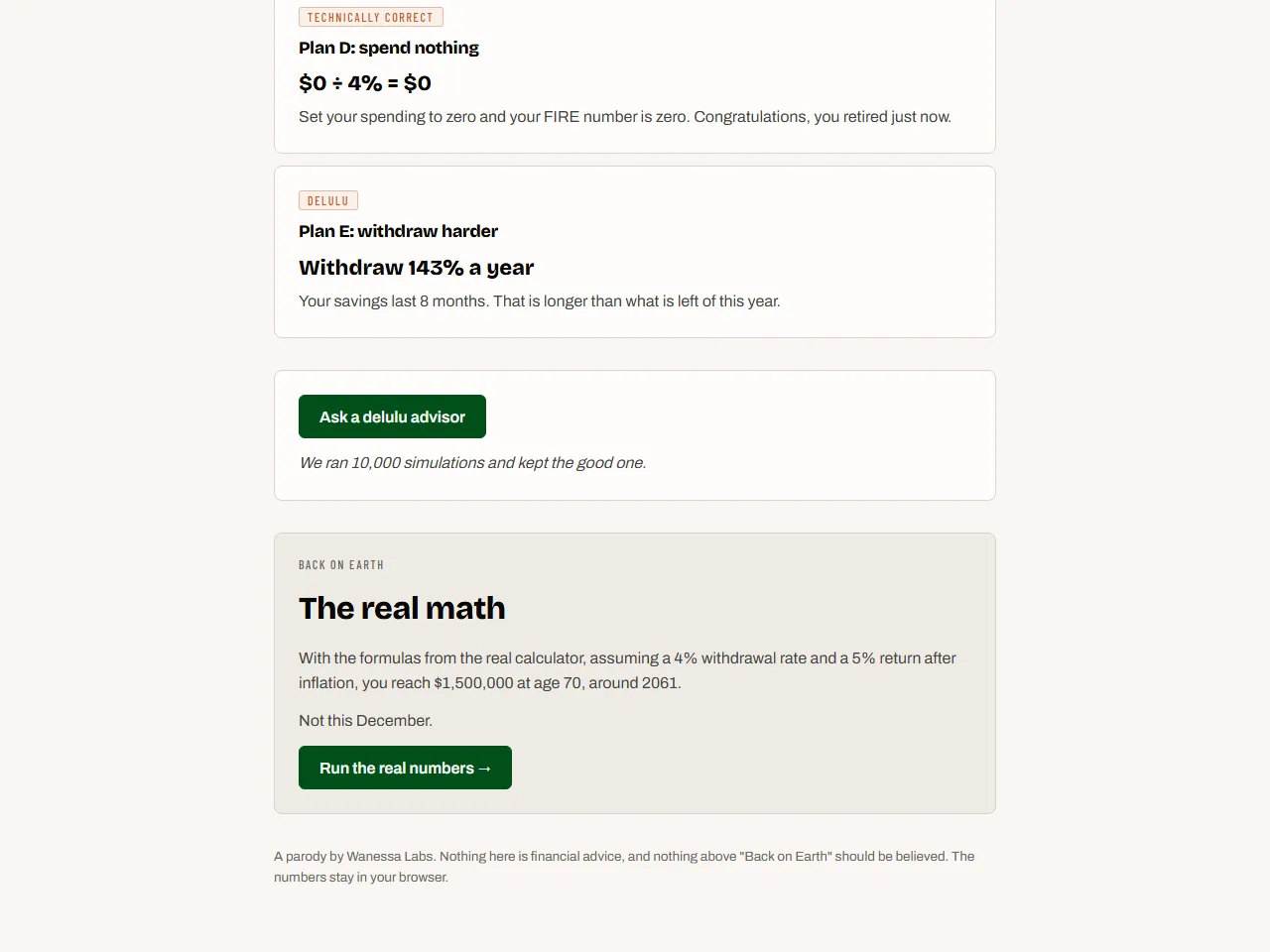
- Plan D sets spending to zero, which makes the FIRE number zero. It is tagged “Technically correct”.
- Plan E withdraws spending divided by savings each year, and says how many months that lasts.
A button asks a delulu advisor for advice and rotates through ten lines, such as “We ran 10,000 simulations and kept the good one.”
A Number Too Big for the Computer
Plan A is the one that broke first. The required return is the growth factor raised to one over the fraction of the year left, and in the last days of December that overflows a 64-bit float: JavaScript prints Infinity. The function works in log space instead, takes the base-10 log of the growth per year, and prints anything past a million per cent as a mantissa and a superscript exponent, so it reads 1.3 × 10¹²% in November and still prints a real number on December 30. A test pins the overflow case. Writing it caught a bug in the test itself: ¹, ² and ³ sit outside the Unicode block that holds the other superscript digits, so a [⁰-⁹] character range misses them.
Back on Earth
The last card drops the bit. It imports fireNumber, yearsToTarget and money from the real FIRE site’s own source, rather than copying them, and states its assumptions: a 4% withdrawal rate and a 5% return after inflation. On the default numbers it says age 70, around 2061, “Not this December”, and links to the real calculator at fire.wanessalabs.com. It covers the two edge cases too: savings that already cover the FIRE number (“Turns out you did not need us”) and a number that is never reached within 60 years.
Built as a Separate Site
It is its own Astro project and its own Cloudflare Pages deployment, not a page on the real FIRE site. The real site is education, and whether it counts as education or advice under Colorado rules is an open question, so the parody stays out of its navigation. It shares the Wanessa Labs design tokens by importing them, keeps the same content security policy, makes no network calls, and names no ticker, issuer or product, which are the same rules the real site follows.
The copy went through two passes before launch. The humanize pass cut one closing line that was trying too hard. The brand-voice review found no hard violations and seven flags, and all seven were addressed. The honest card contradicted itself when savings already covered the goal, its fallback sentence did not read as one, and “The real answer” sounded like advice, so it became “The real math”. Lines that could read wrong in a cropped screenshot were rewritten: “Quit on Friday” became “Practice your farewell speech”, and “Retirement can be short”, meant as money running out, now says the savings last shorter than the rest of the year.
It shipped the same day it was proposed, in two pull requests. The second pointed both of its links at the real site’s own domain.